The Become Journal · Money
How to Save Money When Money Is Tight: 12 Steps That Actually Work
If you are starting over, living paycheck to paycheck or rebuilding after a hard season, "just save 20%" is not helpful advice. Here is what actually works when money is tight.
1. Know your real numbers
Write down what comes in each month and every bill that goes out. Most people have never seen it all on one page. That page is your starting line.
2. Start an emergency fund of $500 to $1,000
A small cushion keeps a flat tire from turning into credit card debt. Build this before anything else.
3. Save first, even $5
Move a small amount to savings the day you get paid. The amount matters less than the habit.
4. Use a separate savings account
Money you cannot see is money you do not spend. Many online banks offer free high-yield accounts.
5. Call your bills
Phone, internet and car insurance companies often have cheaper plans or promotions if you ask. One call can save more than a month of skipped coffees.
6. Cancel or pause subscriptions
Look at your bank statement for anything recurring. Keep what you use every week. Pause the rest.
7. Plan meals around what you have
Groceries are one of the easiest places to save. Shop with a list, cook in batches and use what is in the pantry first.
8. Try a money challenge
Challenges make saving feel like a game. Try the 52-week money challenge, the 100 envelope challenge or a 30-day no-spend challenge.
9. Pay off debt one at a time
List your debts. Either pay the smallest first for quick wins, or the highest interest first to save the most. Both work if you stick with it.
10. Save the "extra" money
Tax refunds, birthday money, overtime and side income: put at least half straight into savings.
11. Earn a little more
Sometimes the answer is not cutting more, it is earning more. See our guide on how to start a business with no money.
12. Track your wins
Write down every milestone: first $100, first debt gone, first month on budget. Progress you can see keeps you going.
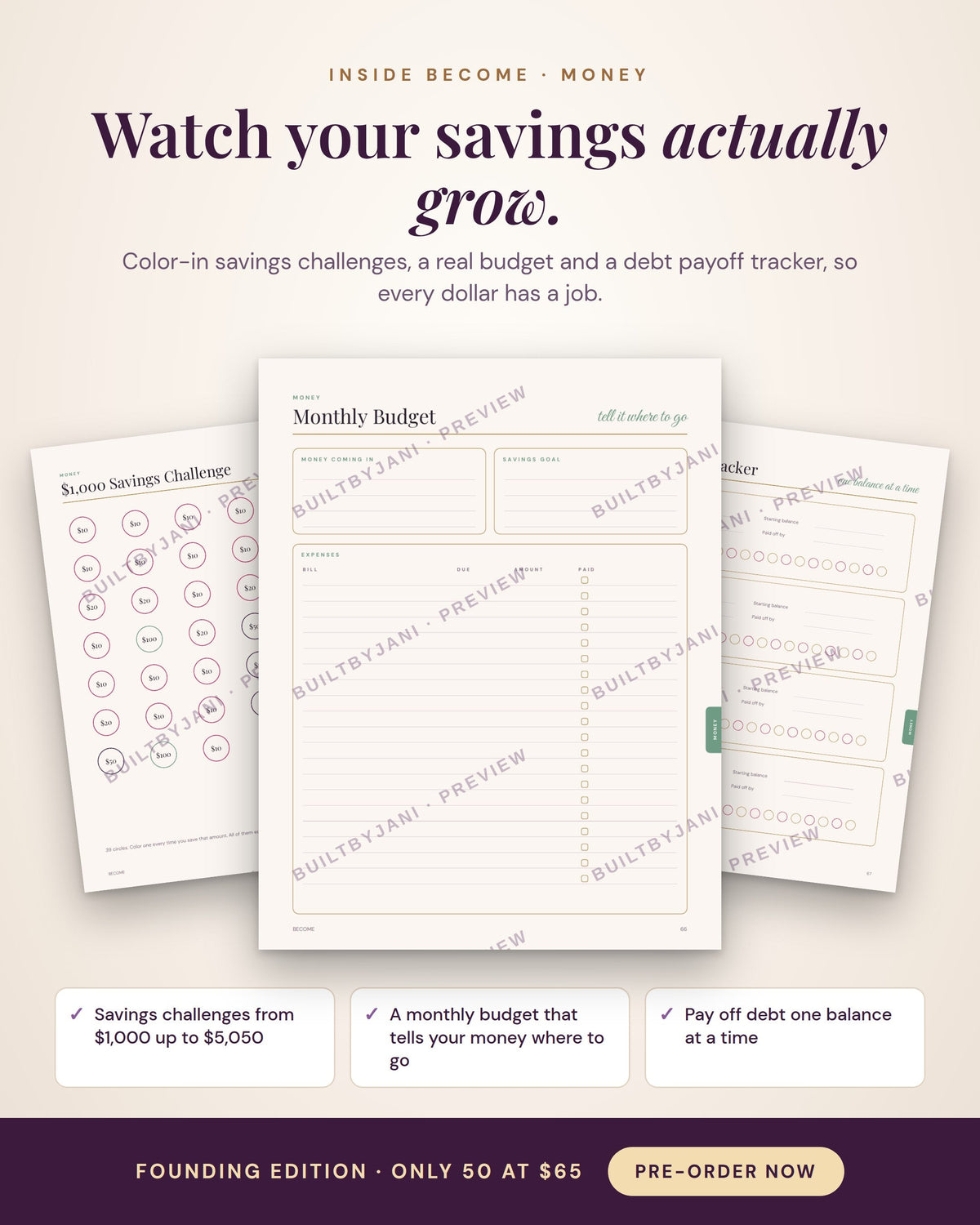
The BECOME Binder puts your budget, savings challenges and debt payoff plan in one place, right next to your goals.
This article is for general information and encouragement, not medical, financial or professional advice. If you are in crisis or thinking about harming yourself, call or text 988 (US) to reach the Suicide & Crisis Lifeline, any time.